Supplesmart
Resveratrol
Resveratrol
Couldn't load pickup availability
Resveratrol is a naturally occurring polyphenol found in certain plants, including grapes, berries, and Japanese knotweed (Polygonum cuspidatum).
It has attracted considerable scientific attention because of its antioxidant properties and its potential influence on biological pathways involved in cellular stress responses, inflammation, and metabolism.
Researchers have investigated resveratrol supplementation in relation to cardiovascular health, glucose metabolism, cognitive function, and aging.
Although laboratory research has identified several potentially interesting mechanisms, human clinical trials have produced mixed results. The long-term health benefits of routine resveratrol supplementation remain uncertain.
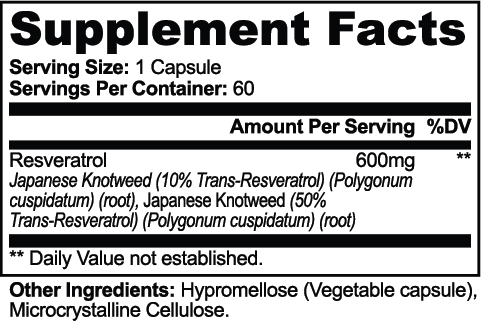
Supplesmart Resveratrol Complex contains a Japanese knotweed root-derived preparation standardized by the supplier to 50% trans-resveratrol.
What Researchers Are Investigating
Cellular Stress Responses
Laboratory studies suggest that resveratrol can influence biological pathways involved in cellular stress responses and metabolic regulation.
However, these findings do not establish that resveratrol supplementation slows human aging or extends lifespan.
Cardiovascular Health
Human clinical trials have examined resveratrol's effects on blood pressure, vascular function, and selected cardiovascular biomarkers.
Some studies have reported encouraging results, while others have found little or no measurable benefit.
Evidence that resveratrol supplementation improves long-term cardiovascular outcomes remains insufficient.
Glucose Metabolism
Researchers have investigated whether resveratrol influences insulin sensitivity and glucose regulation.
Certain studies involving individuals with metabolic disorders have reported improvements in selected biomarkers, but findings remain inconsistent.
Resveratrol has not been established as a substitute for proven approaches to metabolic health.
Inflammation and Oxidative Stress
Resveratrol exhibits antioxidant and anti-inflammatory activity in laboratory experiments.
Some human studies have investigated its effects on inflammatory and oxidative-stress biomarkers, although the clinical significance of these findings remains uncertain.
What Remains Uncertain?
Important questions remain about resveratrol supplementation:
- Whether its laboratory effects translate into meaningful long-term health benefits.
- Which populations, if any, are most likely to benefit.
- What doses and formulations are most appropriate for human use.
- How extensive metabolism affects its biological activity.
- Whether regular supplementation produces benefits that outweigh its potential risks.
Product Details
- Primary ingredient: Resveratrol complex
- Botanical source: Polygonum cuspidatum root
- Labeled complex strength: 600 mg per serving, pending verification
- Supplier-stated standardization: 50% trans-resveratrol
- Capsules per bottle: 60
- Other ingredients: Hypromellose (vegetable capsule), microcrystalline cellulose
- Manufactured in: USA
Suggested Use
Follow the directions on the verified product label or the guidance of a qualified healthcare professional.
Important Safety Information
Resveratrol may cause gastrointestinal discomfort, including nausea, abdominal discomfort, or diarrhea.
Individuals taking anticoagulant or antiplatelet medications should consult a healthcare professional before use because of potential effects on platelet function and bleeding risk.
Individuals with medical conditions, those taking prescription medications, or those preparing for surgery should seek professional advice before supplementation.
Safety during pregnancy and breastfeeding has not been established. Not intended for children.
Keep out of reach of children. Do not exceed the recommended dose. Do not use if the safety seal is damaged or missing. Store in a cool, dry place.
Supplesmart Research
Promising Biological Mechanisms. Uncertain Clinical Outcomes.
Resveratrol is classified as Supplesmart Research because its biological properties have been extensively investigated, but consistent, clinically meaningful benefits from routine supplementation have not been established.
This classification does not imply that resveratrol has been proven to slow aging, prevent cardiovascular disease, or improve longevity.
Explore the Supplesmart Science Library for a closer examination of the clinical research, mechanisms of action, formulation considerations, and safety information.
These statements have not been evaluated by the Food and Drug Administration. This product is not intended to diagnose, treat, cure, or prevent any disease.